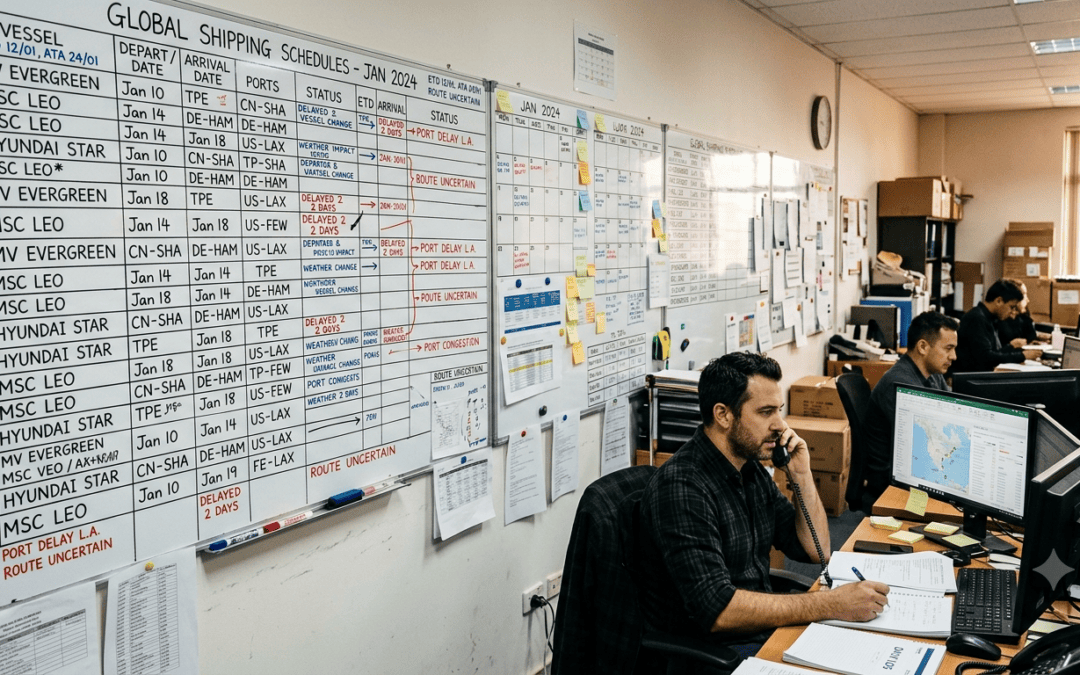
Over the past several years, businesses have become accustomed to one reality: shipping schedules aren’t as predictable as they once were. There was a time when importers and exporters could build production plans, inventory levels, and customer commitments around relatively consistent vessel arrivals. While weather or mechanical issues occasionally caused delays, shipping schedules were generally dependable enough to support long-term planning. Today, however, global supply chains operate in a far more dynamic environment.
Carrier capacity management, port congestion, equipment imbalances, geopolitical disruptions, and severe weather all influence whether a shipment arrives on time—or several days (or even weeks) later than expected.
For businesses importing food products, agricultural commodities, consumer goods, or industrial materials, understanding why shipping schedules have become less reliable is the first step toward building a more resilient supply chain.
Blank Sailings Reduce Available Capacity
One of the biggest contributors to unpredictable shipping schedules is the growing use of blank sailings. A blank sailing occurs when an ocean carrier cancels a scheduled voyage, effectively removing a vessel from its published rotation. Rather than operating every scheduled departure, carriers may reduce capacity when demand softens or when they need to rebalance their networks. While this strategy helps carriers better align capacity with market conditions, it can create significant challenges for shippers.
When a sailing is canceled, cargo often must wait for the next available vessel, resulting in longer transit times, increased competition for container space, and changes to delivery schedules. According to recent data from Sea-Intelligence, carriers continue to rely heavily on blank sailings as part of their capacity-management strategies, even as overall fleet capacity has grown.
Equipment Shortages Aren’t Always About Containers
When businesses hear the phrase “equipment shortage,” they often assume there simply aren’t enough shipping containers available. The reality is more nuanced. In many cases, containers exist, but they may be in the wrong place. Global trade is constantly moving equipment between ports, and disruptions can leave empty containers, refrigerated units (reefers), chassis, or specialized equipment stranded where they’re needed least.
Rail congestion, inland transportation delays, and uneven trade flows can all make it difficult to position equipment where exporters and importers need it most. For food and agricultural shippers that rely on refrigerated or specialized containers, these imbalances can create additional scheduling challenges, even when vessel space is available.
Port Congestion Creates Delays Beyond the Vessel
Many people still associate port congestion with images of ships anchored offshore waiting for a berth. While those scenes became familiar during the pandemic, today’s congestion often occurs after a vessel reaches port. Cargo movement depends on a complex network that includes:
- Terminal operations
- Customs processing
- Truck availability
- Rail connections
- Warehouse capacity
A ship may arrive on schedule, but containers can still experience delays moving through the port if one part of that network slows down. These bottlenecks can ripple throughout the supply chain, affecting delivery appointments, production schedules, and inventory availability.
Rerouting Changes More than the Route
Global shipping routes are continually adjusted in response to changing conditions. Security concerns in the Red Sea have prompted many carriers to divert vessels around the Cape of Good Hope rather than transit through the Suez Canal. Likewise, drought-related restrictions in the Panama Canal have required carriers to evaluate alternative routing options.
While rerouting improves safety and operational flexibility, it also adds transit time, increases fuel consumption, and alters vessel rotations. Even businesses that aren’t shipping directly through these waterways may experience downstream effects as carriers rebalance their global networks. A routing decision made thousands of miles away can ultimately influence vessel availability and shipping schedules across multiple trade lanes.
Weather and Security Events Can’t Be Planned
Some disruptions simply can’t be avoided. Hurricanes, typhoons, flooding, labor strikes, and geopolitical conflicts all have the potential to interrupt vessel operations with little warning. When these events occur, carriers often adjust schedules to protect crews, cargo, and vessels.
Because shipping networks are interconnected, a disruption in one region can create delays elsewhere as vessels arrive behind schedule and carriers work to restore normal service. It’s another reminder that today’s global supply chains require greater flexibility than they did just a few years ago.
Flexibility Is the New Standard
While unpredictable shipping schedules have become more common, businesses aren’t powerless. Successful importers and exporters are adapting by:
- Planning shipments earlier
- Building realistic schedule buffers
- Diversifying suppliers and transportation options where appropriate
- Monitoring market conditions
- Partnering with experienced freight forwarders who provide proactive communication and shipment visibility
Industry data continues to show that schedule reliability remains below the consistency many businesses enjoyed a decade ago, underscoring the importance of planning for variability rather than assuming every shipment will arrive exactly as scheduled.
Looking Ahead
Shipping schedules are unlikely to return to the level of predictability many businesses once expected. Global logistics have become more interconnected, dynamic, and responsive to changing market conditions. The good news is that companies don’t need perfect predictability to operate successfully; they need preparation.
By understanding the factors influencing vessel schedules and building flexibility into supply chain planning, importers and exporters can reduce risk, improve resilience, and make better-informed logistics decisions. In today’s shipping environment, success isn’t about avoiding disruption altogether. It’s about being prepared to navigate it.
Cyclone Shipping stays up to date with the latest shipping schedules and global events to ensure your items get where they need to be. If you’re looking for a freight forwarder to partner with, contact us.