Artificial intelligence has found its way into just about every industry at this point, and freight forwarding is no exception. For importers and exporters, however, the question isn’t whether AI sounds impressive. The more important question is whether it actually makes shipping easier. In international freight, useful technology should answer practical questions such as:
- Where’s my cargo?
- When will it arrive?
- Has something changed?
- Is there a problem I need to know about?
- And if there is a problem, what should I do about it?
That’s where AI and real-time cargo visibility can provide real value.
At Cyclone Shipping, technology is one part of a broader approach to visibility and communication. The goal isn’t to replace experience or relationships with an algorithm. It’s to use better information to identify potential problems earlier, communicate more effectively, and help clients make better decisions about their shipments.
Real-Time Tracking Is the Starting Point
Knowing where a shipment is today is important. But basic tracking only tells part of the story. Traditional shipment tracking might show that a container is on a vessel, has arrived at a port, or is moving toward its destination. That’s useful information, but it doesn’t necessarily tell you what will happen next.
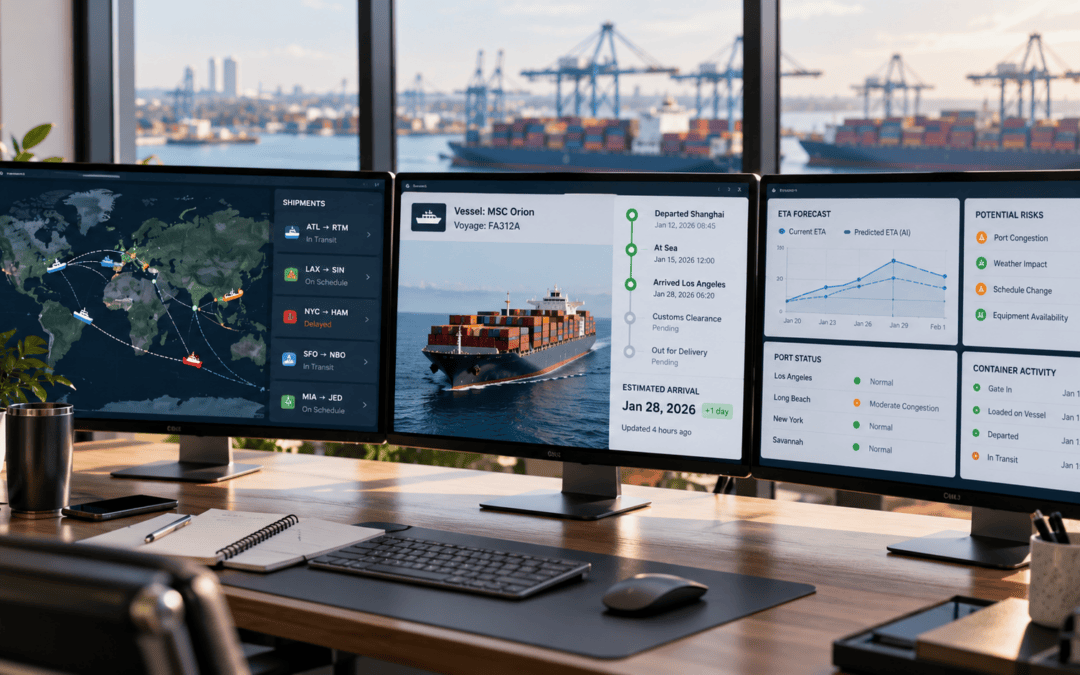
Modern visibility tools can bring together information from carriers, vessels, ports, terminals, and other sources to create a more complete picture of a shipment’s journey. That means businesses can spend less time searching for updates and more time using the information to manage their supply chains. For an importer waiting on inventory or an exporter managing customer commitments, that additional visibility can make a meaningful difference.
Predictive Visibility Goes a Step Further
The real opportunity with AI isn’t simply knowing where a shipment is. It’s using available data to estimate what is likely to happen next. AI-enabled systems can analyze large amounts of historical and real-time information to estimate arrival times, identify unusual patterns, and flag conditions that could affect a shipment.
For example, a vessel may still be moving according to its published schedule, but changing conditions at the destination port could indicate that the original ETA is becoming less realistic. Instead of waiting until a shipment is officially late, predictive visibility can give logistics teams an earlier indication that the plan may need to change.
The difference to remember is that visibility tells you where things are; predictive visibility helps you prepare for where they’re going.
Earlier Issue Detection Creates More Options
One of the biggest benefits of better visibility is time. If a shipment is already delayed by a week, there may be very little anyone can do about it. But if a potential delay is identified several days earlier, a business may have options:
- Perhaps a different delivery appointment can be arranged.
- Maybe inventory can be allocated differently.
- A customer can be notified.
- Production plans can be adjusted.
- In some cases, an alternative routing or transportation option may be worth considering.
AI can help identify these situations by analyzing patterns and comparing current shipment activity against expected timelines. The technology doesn’t solve the problem by itself, but it does give people an earlier signal that there may be a problem worth investigating. That distinction matters because an alert without a response plan isn’t particularly useful.
Better Visibility Leads to Better Communication
Technology can also improve communication between freight forwarders and their clients. Instead of waiting for someone to manually check a shipment and send an update, automated alerts and predictive systems can identify changes that deserve attention. And that can make communication more proactive.
At Cyclone Shipping, this fits naturally with an approach we’ve been using long before AI became a shipping buzzword: keeping a close eye on shipments and communicating with clients when something changes. Technology simply gives us more information faster. And that’s the way AI should function in freight forwarding. It should make human communication better—not make communication disappear.
Better Information Makes Better Planning Possible
Cargo visibility becomes even more valuable when businesses use the information to plan ahead. Importers can use updated ETAs to better coordinate inventory, warehousing, production, and customer commitments. Exporters can use shipment information to keep customers informed and adjust when schedules change.
For businesses moving seasonal, agricultural, or other time-sensitive products, that additional information can be especially valuable. A shipment that arrives two days earlier or later than expected may not sound significant in isolation, but when multiple shipments, warehouse appointments, production schedules, and customer commitments depend on those dates, small changes can quickly have larger operational consequences.
Better visibility allows businesses to plan around those changes rather than simply react to them.
Where AI Falters
Not every AI-powered logistics tool provides meaningful value. A system that generates impressive-looking dashboards but relies on incomplete or outdated data isn’t going to improve decision-making. Neither is an automated alert that produces dozens of notifications without distinguishing between a minor change and a genuine operational risk. And an AI tool cannot replace the judgment that comes from understanding a particular shipment, trade lane, carrier, port, commodity, or customer requirement.
The most useful technology is technology that makes information more accurate, timelier, and more actionable. The goal isn’t to have more data. It’s to have better information at the moment you need it.
AI Is One Piece of a Larger Cargo Visibility Strategy
AI-enabled tools are becoming an increasingly important part of supply chain visibility. Current logistics platforms are using AI and data science to improve predictive ETAs, identify route deviations, close gaps in shipment milestones, and highlight potential disruptions earlier. But AI is only one piece of the puzzle.
Reliable carrier data, real-time tracking, accurate schedules, and communication matter. Perhaps most importantly, an experienced freight forwarder understands what all that information means.
That’s why Cyclone Shipping’s approach isn’t about chasing the latest technology simply because it’s new. It’s about using the tools that help us give clients better visibility, identify potential issues earlier, communicate more effectively, and make smarter shipping decisions.
Technology Should Make Shipping Feel Less Complicated
International shipping will never be completely predictable. Vessels get delayed. Ports become congested. Routes change. Weather disrupts schedules. Global events can alter shipping networks with very little warning. Technology can’t eliminate those challenges. What it can do, however, is help businesses see them coming sooner.
And that’s where AI and real-time cargo visibility become genuinely useful—not as replacements for freight-forwarding expertise, but as tools that help experienced logistics professionals turn more information into better decisions. At Cyclone Shipping, that’s the standard we apply to technology: Does it help us serve our clients better? If the answer is yes, it’s worth using.
Better visibility isn’t about having a futuristic dashboard. It’s about knowing what’s happening with your cargo, understanding what may happen next, and having enough time to do something about it.
If you need a freight-forwarding partner who’s smart enough to integrate AI without blindly relying on it, let’s talk. We’re ready to help you leverage technology for good.